ServicesPaint-Ready Prep
Paint-Ready Wall Prep in Secaucus
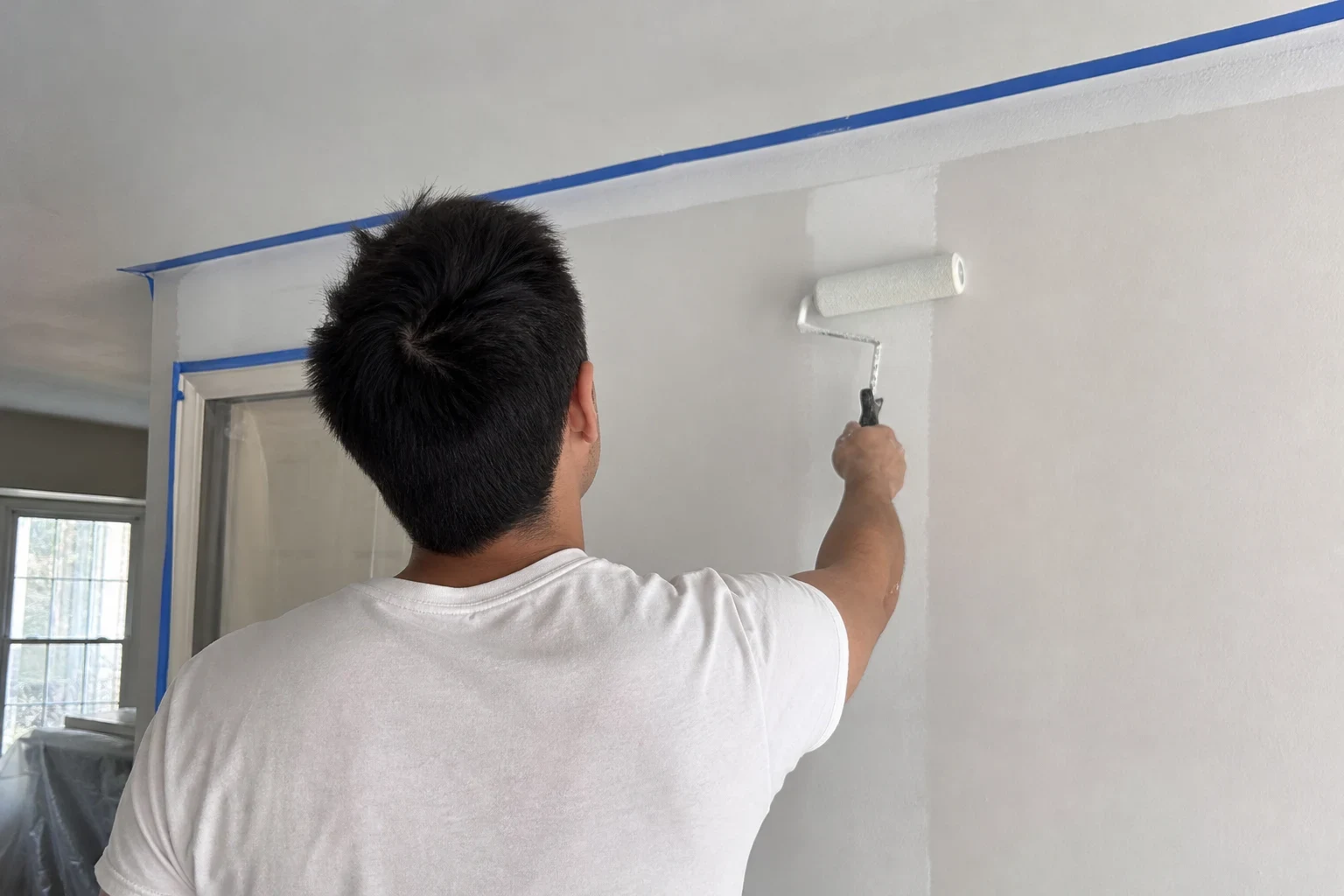
Planning to repaint a room? We handle the drywall side first. We patch dents and cracks, smooth old repairs and sand everything flat, so your painter, or you, start on even walls. We protect your floors and furniture and leave the room swept each day.
The work that happens before the paint goes on
We are a drywall company, so we want to be straight with you: we do not paint whole rooms. What we do is the part that decides how good the paint looks. A new coat of color shows every nail pop, seam line and lumpy old patch, especially where window light rakes across the wall in the afternoon.
Our job is to get those walls flat and sound. We repair the damage, feather the compound out wide, sand it smooth and prime the repaired spots. If you want the fixed areas blended in without repainting the whole wall, our paint touch-ups cover that too.
Through all of it, the room stays protected. Drop cloths go down, furniture gets covered or moved, and we clean up before we leave every day.
What paint-ready prep includes
- Crack and nail pop repair
- We reset popped screws, cut out loose compound and re-tape cracked seams so they stay closed after the paint dries.
- Patching holes and dents
- Doorknob holes, anchor holes and furniture dings get a proper patch, built up in thin coats and feathered wide so no ridge shows.
- Skim coating rough areas
- Where old tape, wallpaper or adhesive pulled the paper face loose, we seal it and skim coat the surface so it reads as one smooth wall.
- Texture matching
- If your walls or ceiling have a texture, we match it over the repair so the patch does not stand out under fresh paint.
- Sanding with dust control
- We sand with care, keep the work area sealed off where needed and vacuum as we go, so dust does not drift into the rest of your home.
- Primer on repaired spots
- Bare compound soaks up paint differently than the wall around it. We prime every repair so your finish coat looks even.
Signs your walls need work before you repaint
Old patches show through
If you can see a raised square or a halo where someone fixed a hole years ago, new paint will make it more obvious, not less.
Seam lines and nail pops
Faint lines every four feet or small round bumps mean tape or fasteners have moved. They need fixing first.
Cracks above doors and windows
Corner cracks tend to come back if they are only caulked and painted. We re-tape them properly.
Torn paper after wallpaper removal
Brown, fuzzy drywall paper will bubble when paint hits it. It has to be sealed and skimmed.
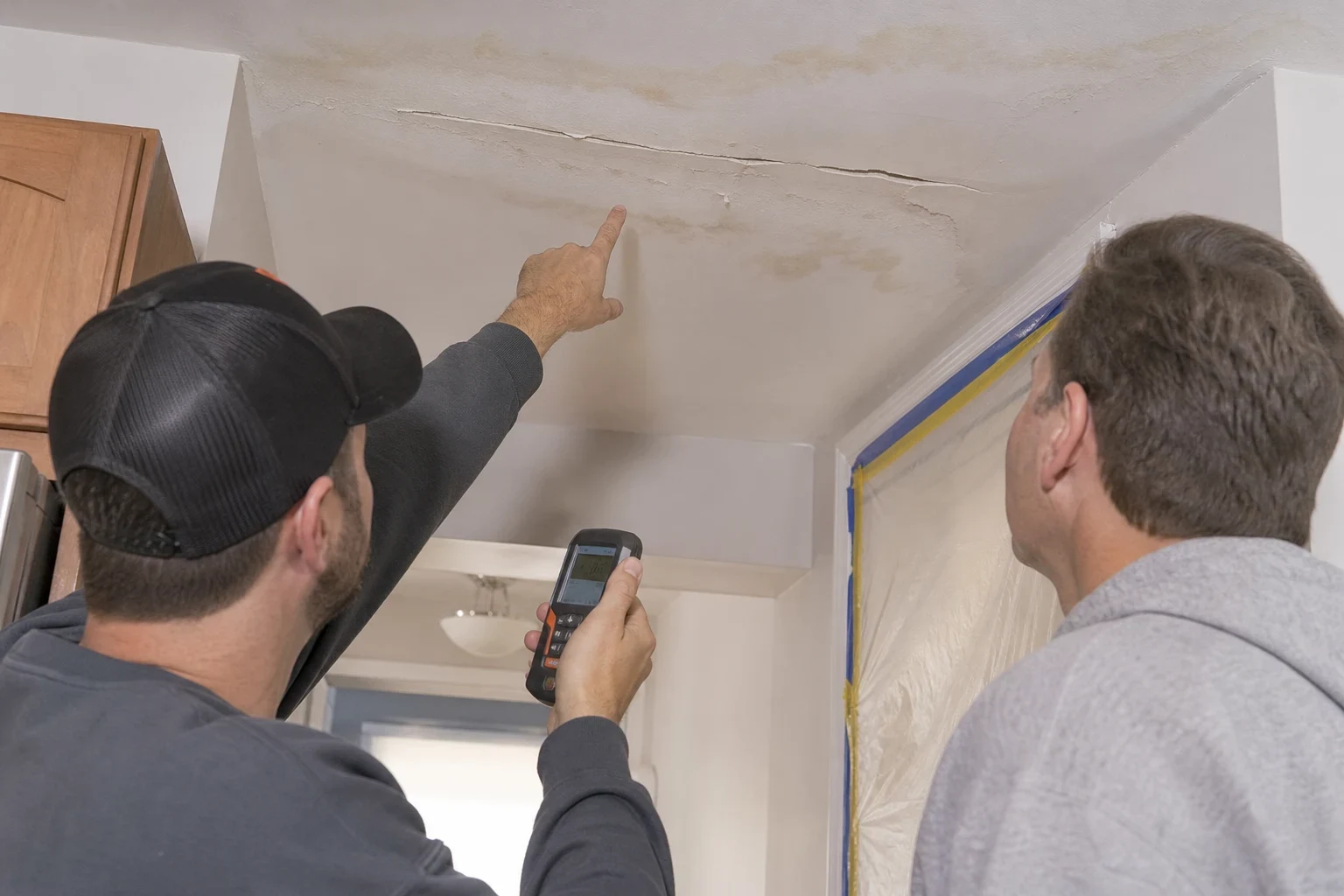
Ceiling stains from an old leak
Once the leak itself has been fixed, we repair the soft or stained drywall so the stain does not bleed through new paint.
How a prep job runs
- 1
Talk it through by phone
You tell us which rooms you plan to repaint and what you are seeing on the walls. We set a time to come look.
- 2
Walk the walls and protect the room
We check each wall with a light held flat against it to catch the flaws you will see later. Then floors get covered and furniture gets moved or wrapped.
- 3
Repair, dry and sand
Compound goes on in thin coats with drying time between each. We sand smooth, check again with the light and fix anything that still shows.
- 4
Prime, clean and hand off
Repairs get primed, the floors get vacuumed and drop cloths come up. You get a room that is ready for paint and tidy enough to use.
What affects the cost of wall prep
Prep pricing depends on how much repair your walls need, not on the square footage of paint. We look at the room in person and explain what we found before any work starts, so you know what you are paying for.
- Number and size of repairs
- A few nail holes take far less time than a wall with cracked seams, dents and old patches to redo.
- Condition of the drywall face
- Torn paper or adhesive residue means sealing and skim coating, which adds coats and drying time.
- Texture on the surface
- Smooth walls are simpler. Matching an existing texture takes more care and sometimes a test patch.
- Ceiling height and access
- Stairwells, tall ceilings and tight spaces need ladders or staging and take longer to protect.
- How full the room is
- An empty room is quicker to set up. A furnished, lived-in room needs more covering and careful moving.
Questions about getting walls ready for paint
Something not covered here? (201) 800-6041
Do you paint the whole room?
No. We focus on drywall repair and the prep that gets walls ready for paint. We do paint touch-ups over the areas we repair, and we are glad to work around the schedule of whoever is painting the room after us.
How long until the walls can be painted?
Most rooms are ready once our last coat of compound is sanded and primed. Joint compound needs to dry fully between coats, and on humid summer days in Secaucus that can take longer, so we plan drying time into the schedule rather than rushing it.
How much dust should I expect?
Some sanding dust is part of the job, but we keep it contained. We cover floors and furniture, close off the work area when it makes sense and vacuum during the day and again before we leave.
Do I need to empty the room first?
It helps to take small items, artwork and anything fragile out of the room. We can move and cover larger furniture ourselves and put it back when we finish.
Can you make a repaired spot disappear without repainting the whole wall?
Often, yes. If you have leftover paint or know the color, our paint touch-ups blend the repair in. Older or faded paint sometimes will not match exactly, and we will tell you honestly if a full wall coat is the better choice.
Get your walls ready for a fresh coat
Tell us which rooms you want to repaint and what the walls look like now. We will come see them, explain what needs fixing and leave the room clean when we are done.