ServicesDrywall Finishing
Drywall Finishing in Secaucus
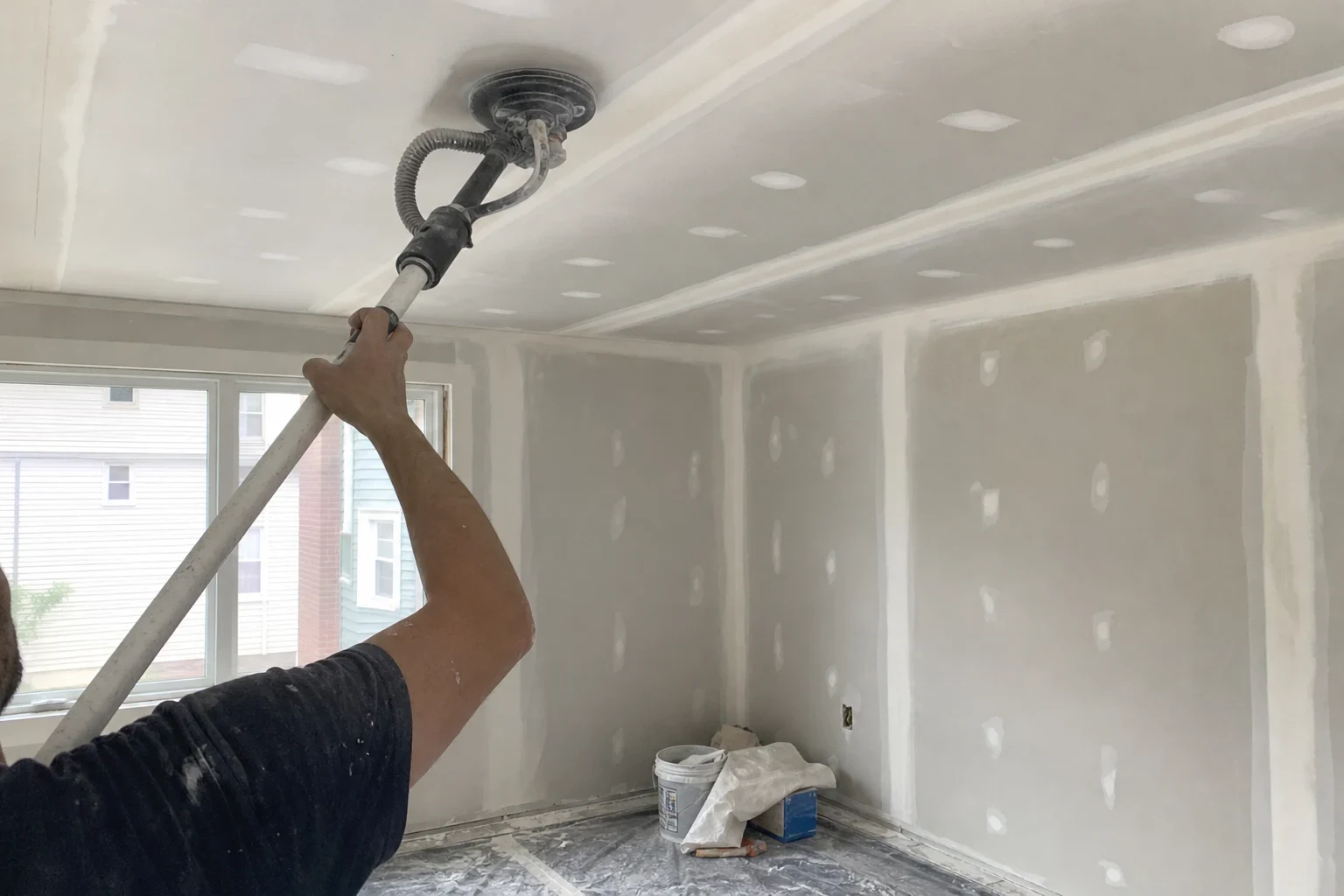
We tape, coat and sand new or repaired drywall until the seams stop showing. Floors are covered, dust is contained, and each day ends with a swept and vacuumed work area, so your home stays livable while the compound dries.
What drywall finishing is and when you need it
Hanging drywall gets the boards on the studs. Finishing is everything after: taping the joints, covering screw heads, building up thin coats of joint compound, and sanding it all flat. It is the step that decides whether a wall looks like one smooth surface or a grid of seams under paint.
You need it after new drywall goes up, after a large repair, or when an earlier finish job left ridges, bubbles or visible tape. If your boards are not up yet, our drywall hanging service handles that first, and we finish what we hang.
Finishing is also the dustiest part of drywall work. That is why we plan the room protection before the first coat, not after the first sanding.
What our finishing work includes
- 01
Taping every joint and corner
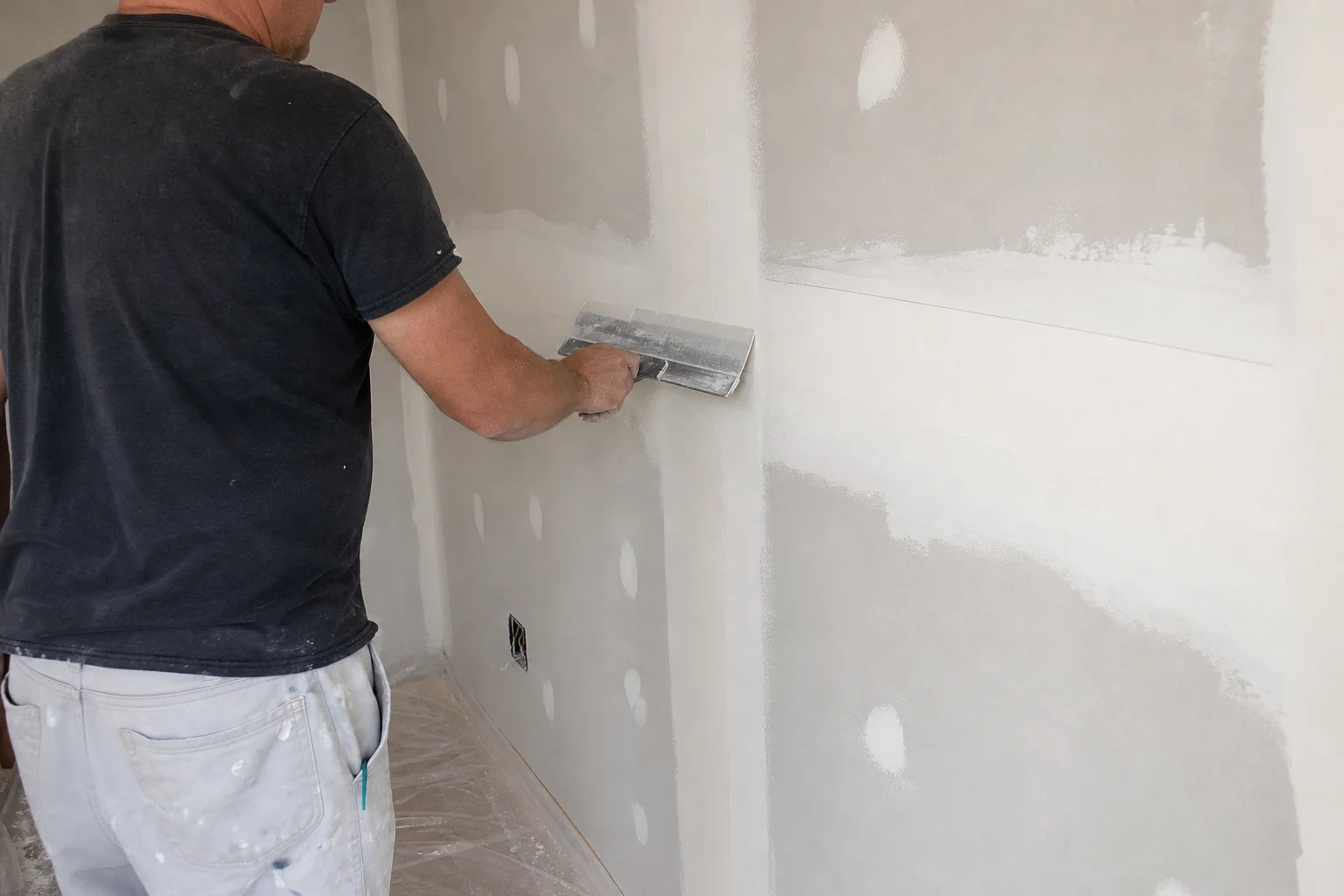
We bed paper tape into compound on flat seams and inside corners, and install corner bead on outside corners so edges stay straight and resist dings.
- 02
Three coats, feathered wide
A bedding coat, a fill coat and a final skim, each one spread wider than the last. Thin coats dry evenly and sand cleanly, which is how the joints vanish into one flat, even wall.
- 03
Fastener spotting
Every screw head gets its own coats so you do not see a polka-dot pattern once the paint goes on.
- 04
Sanding with dust control
We sand with fine-grit screens and vacuum-attached sanders where we can, with plastic sheeting over doorways and vents to keep dust in the room we are working in.
- 05
Texture matching
If the rest of the room has a knockdown, orange peel or skim texture, we match it so new sections blend with the old walls.
- 06
Daily cleanup and protection
Drop cloths and floor paper go down before we open a bucket. Before we leave each day, we sweep, vacuum and stack our tools neatly out of your way.
Questions about Drywall Finishing?
Call(201) 800-6041Signs your drywall needs finishing work
Seams show through the paint
Straight lines or raised strips visible in side light usually mean the joints were not built up and feathered enough.
Screw heads or nail pops
Small round bumps or dimples across a wall point to fasteners that were never fully covered or have backed out.
Tape bubbling or peeling
Tape that lifts or blisters was bedded with too little compound. It needs to be cut out and redone, not painted over.
Cracks along corners
Hairline cracks in inside corners often follow seasonal swings, like the humid summers and dry, heated winters we get here, and need retaping.
Flat or shiny patches under paint
This is called flashing. Bare compound absorbs paint differently than paper, so the surface needs proper finishing and priming.
How a finishing job runs
- 1
Look and plan
We start with a phone conversation, then look at the walls, the lighting and the texture so we can explain the work and the timeline before anything starts.
- 2
Protect the room
Floors get covered, furniture is moved or wrapped, and doorways and air vents are sealed with plastic to keep dust where it belongs.
- 3
Tape and coat
We tape the joints, set corner bead and apply the first coat. Each coat needs to dry fully, often overnight, and longer in humid weather.
- 4
Sand and check
After the final coat, we sand smooth and check every wall with a work light held at a low angle, touching up anything that casts a shadow.
- 5
Final cleanup
We remove plastic, vacuum surfaces and floors, and walk the room with you so you can see the result.
What affects the cost of drywall finishing
Finishing is priced by the work involved, not a flat number. We look at the space first and give you a clear quote with what is included spelled out, so you know where the money goes before we start.
- Size and number of seams
- More square footage and more joints mean more taping, more coats and more sanding.
- Level of finish
- A standard finish suits most rooms. Walls under strong window light or getting glossy paint may need a full skim coat, which adds time and material.
- Ceilings and height
- Ceilings and tall stairwell walls take longer and may need scaffolding or extra setup.
- Texture matching
- Recreating an existing texture takes testing and care to blend with what is already there.
- Condition of the hang
- Boards with wide gaps, broken edges or loose screws need fixing before finishing can start.
Drywall finishing questions
How long does finishing a room take?
Most rooms take several days because each coat has to dry before the next goes on. Humidity and temperature affect drying time. We give you a realistic schedule after seeing the space.
How much dust will there be?
Sanding does make dust, but we contain it. Doorways and vents are sealed, we use vacuum-attached sanders where possible, and we clean up every day rather than once at the end.
Can you finish drywall someone else hung?
Yes. We look at the boards first. If there are gaps, loose fasteners or damaged edges, we tell you and fix them before finishing so problems do not show later.
Will the walls be ready for paint when you are done?
Yes, the surface is left smooth and ready for primer and paint. For small repaired areas, our paint touch-ups service can blend the spot into the surrounding wall.
Do I need to leave the house during the work?
No. Most people stay home. We keep the work area closed off, keep walkways clear, and leave the room tidy each evening.
Ready for walls where the seams disappear
Tell us about the room, the drywall and the finish you want, and we will explain the work and give you a clear quote. We work in Secaucus and nearby towns like Jersey City and North Bergen.