ServicesDrywall Patching
Drywall Patching in Secaucus, NJ
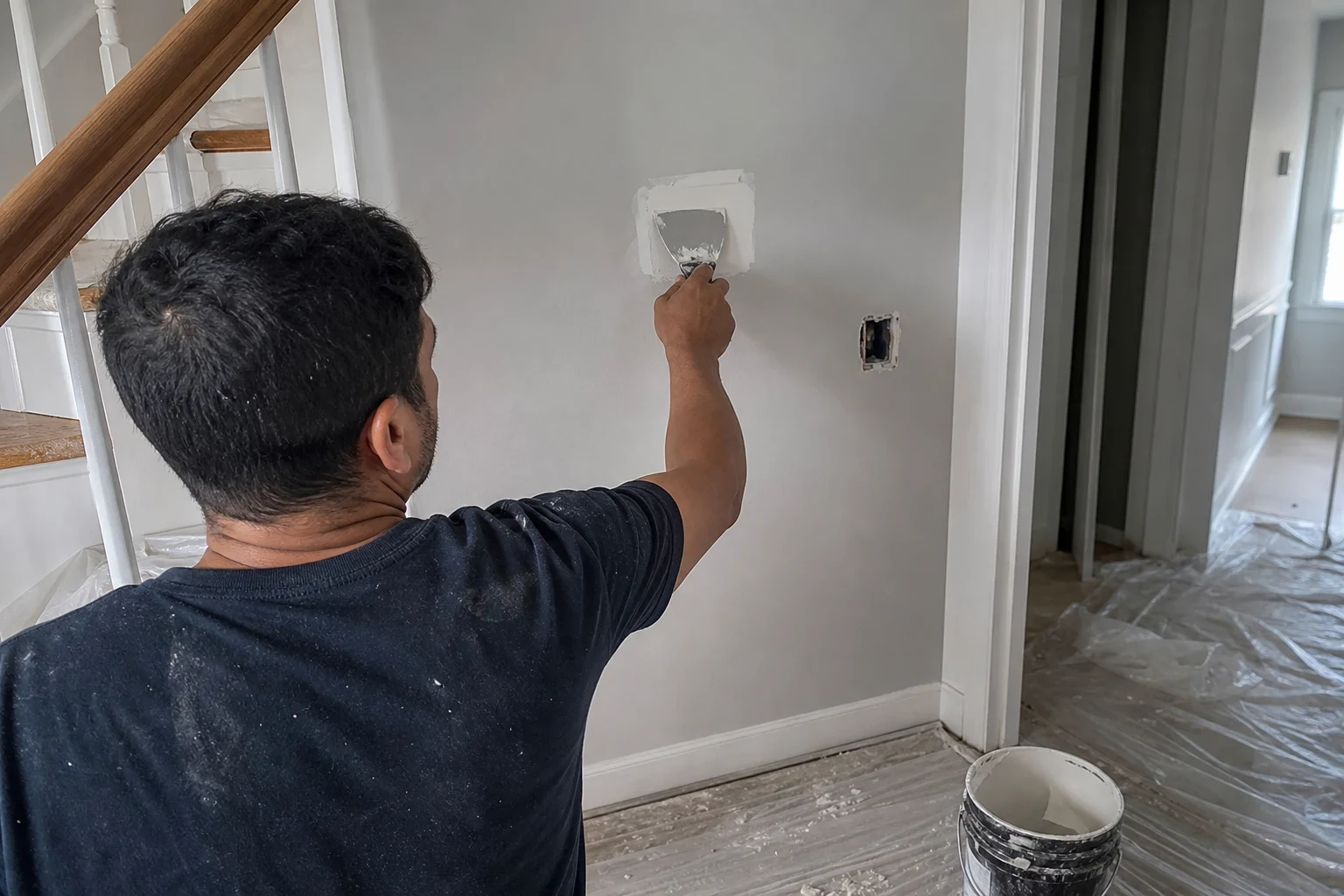
We patch the holes that make a room look tired: doorknob punctures, anchor tears, cut-outs from cable or electrical work, and gouges from moving day. Each patch is taped, feathered and sanded flat, and your floor and furniture stay covered until we vacuum up and go.
When a patch is the right fix
Patching is for damage that stays in one small area, usually anything from a nail hole up to roughly the size of a dinner plate. If the drywall around the hole is solid and dry, a patch blends the damage away without tearing out the whole panel.
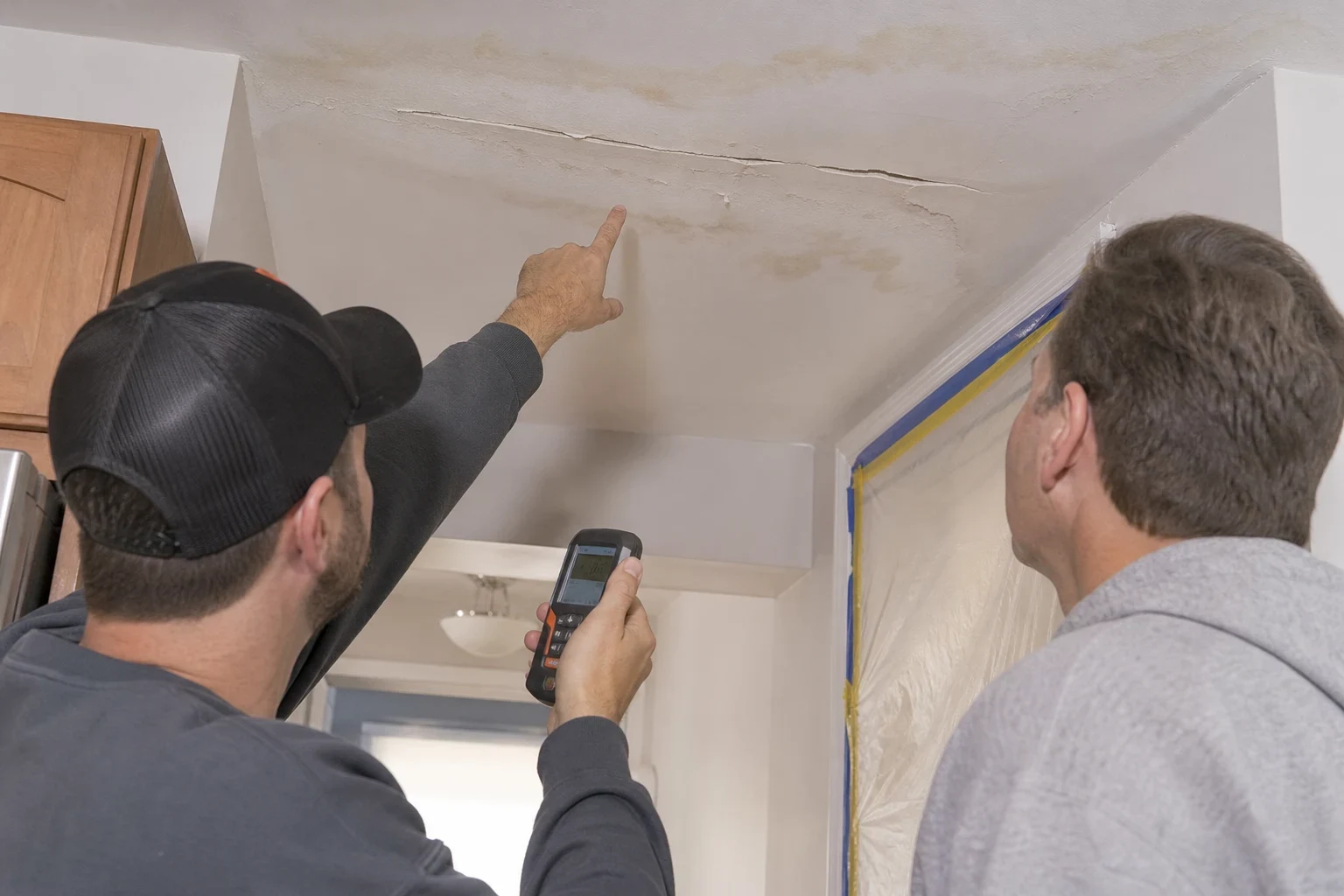
Some damage needs more than a patch. Board that is soft, stained or crumbling from a leak, or a crack that runs the length of a wall, will keep coming back if we only fill it. When we see that, we tell you plainly and explain what our drywall repair or ceiling repair work would involve instead.
Patching makes dust, mostly at the sanding stage, so we plan for it. Drop cloths and plastic go down before any tool comes out, we sand with a vacuum attachment wherever we can, and we wipe down the work area before we leave each visit.
What our patching work covers
- Nail holes and nail pops
- We reset popped screws or nails, add a fresh screw nearby so the board stays tight, and fill each spot with compound in thin coats.
- Doorknob and fist-size holes
- For holes a few inches across we cut a clean square, set in a new piece of drywall with tape or backing, and build the surface up with two or three coats. A doorstop afterward keeps it from happening again.
- Larger cut-outs
- Openings left from an old outlet, a removed medicine cabinet or an access panel get wood cleats behind them so the new piece is screwed to something solid. Then we tape the seams and feather the compound wide so no edge shows.
- Texture matching
- Smooth, orange peel and knockdown walls each need a different touch. We test the texture on the patch and adjust until it reads the same as the wall around it in normal light.
- Spot priming and paint touch-up
- Bare compound soaks up paint differently than the rest of the wall, so we prime every patch. If you have leftover paint, we can do the paint touch-up too.
Signs your walls are ready for a patch
A doorknob went through the wall
Usually a round, crumbly hole right behind the door. It only grows if the door keeps swinging into it.
Anchors pulled out after a TV came down
Wall mounts and shelf anchors often leave torn paper and ragged holes. Those need to be cut back and filled, not just smeared over.
Holes left by other trades
Electricians and cable installers often cut openings to fish wires and leave them open. A patch closes them so the wall looks finished again.
Small bumps or circles in a row
Those are nail pops, where the fastener has worked loose and pushed the compound out. They tend to show up along studs.
An old patch you can still see
A raised ring, a flat spot on a textured wall or a patch that looks shinier than the rest means it was never feathered or primed. We can redo it so it disappears.
What affects the cost of patching
Patching is priced by the work involved, not by a flat rate per hole. We explain what we see on the phone and walk you through what changes the number before any work starts. Here is what usually moves it.
How many holes, and how big
A handful of nail holes is a quick job. Several doorknob holes or a large cut-out takes more material, backing and coats.
Wall texture
Smooth walls take careful sanding. Textured walls need extra time to match the pattern so the patch blends in.
What we find behind the hole
If there is no stud nearby, we add backing. If the board turns out to be damp or damaged beyond the hole, we stop and talk with you before going further.
Number of visits
Standard compound needs drying time between coats, which can mean a return trip. Fast-setting compound can shorten the job on some patches.
Height and paint
Patches high in a stairwell need ladders or planks. Adding a paint touch-up at the end adds a little time too.
How a patching job runs
- 1
We talk it through by phone
You tell us how many holes, roughly how big, and which rooms. That helps us bring the right materials and plan how many visits it will take.
- 2
We cover the room first
Drop cloths go over the floor, plastic goes over nearby furniture, and we ask you to clear shelves and wall hangings close to the work. Doorways to the rest of your home can be sealed off if the sanding will be heavier.
- 3
Patch and coat
We cut back loose material, set backing or new drywall where needed, tape and apply the first coat. Compound needs to dry between coats, and in humid summer weather that can take longer, so many jobs run over two short visits.
- 4
Sand, prime and clean
We sand each patch smooth, check it with a light held flat to the wall, match the texture and spot prime. Then the plastic comes up, the floor gets vacuumed and the room is ready to use.
Drywall patching questions
Will I be able to see the patch afterward?
Done right, no. We feather the compound well past the edge of the hole, sand it flat and match your texture. The patch also gets primed so the paint dries with the same sheen as the rest of the wall.
How long does a patch take?
Small holes can often be finished in one visit. Larger holes usually need two or three coats with drying time between them, so plan on two short visits a day or so apart.
How much dust will there be?
Some, mainly when we sand. We keep it contained with plastic and drop cloths, use a vacuum attachment while sanding where we can, and clean the work area before we leave each time.
Do I need to move my furniture?
Just clear a few feet in front of the wall and take down anything hanging nearby. We cover what stays in the room, and we can help shift heavier pieces a short distance.
Can you match my paint?
If you have the leftover can, we can usually blend the touch-up well. Without it, an exact match on one small spot is hard, and touching up the wall section from corner to corner often hides the patch better.
Ready to close up those holes
Tell us what the damage looks like and how many rooms are involved. We will explain the patch, the number of visits and how we will keep your home clean while we work.